


Natural Capital
Contributing to sustainable development
We are cognizant of our business’ impacts on the environment and on communities. Towards this, we deploy the most stringent systems and processes for monitoring our environmental footprint and undertake measures for proper waste and water management, prudent resource allocation, improve energy efficiency, and thereby contribute to a circular economy.

SDGs impacted

Addressing Climate Change
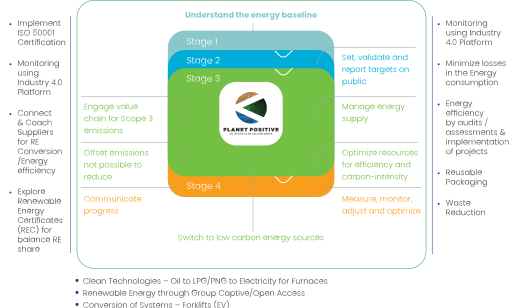
We have embraced the imperative of reducing our carbon emissions. Aligned to this, we have taken significant measures to switching to sustainable energy sources. In FY 2023, a substantial 29.25% of our electricity consumption was derived from renewable sources including 74,906.640 MWh from solar energy and 30,986.885 MWh from wind energy. We have replaced oil fuels in furnace operations with cleaner natural gas, resulting in ~16% to 20% carbon dioxide emission reduction. Implementation of frequency modulation in critical systems such as air compressors, cooling towers and furnaces with the help of Variable Frequency Drives (VFD), helped in reducing the energy consumption to the extent of 398 MWh and reduction of carbon dioxide by 313 tons.
To augment our efforts, we have initiated a program to transition all the diesel-operated forklifts into electrically-operated ones. We further intend to utilize renewable energy to make them ‘Green Forklifts’ in near future. Additionally, we have mapped our operational carbon footprint, and got it validated by an external certifying agency. This helped in defining the emission reduction targets and actionable for the future. Our focus is on managing energy supply, optimizing resource consumption, switching to lower carbon energy sources, offsetting emission and engaging value chain.
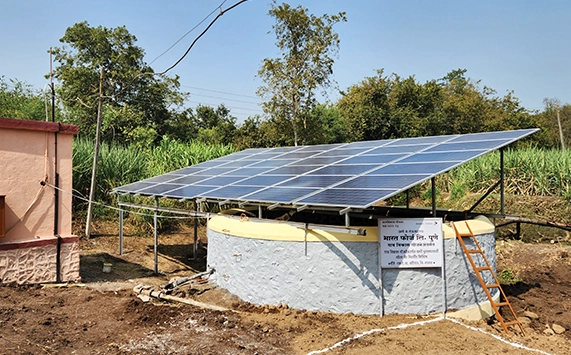
Harnessing solar energy
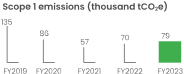
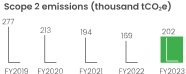
BFL Decarbonization Roadmap
Advancing from Zero Liquid Discharge (ZLD) to Water Positivity
We are committed to responsible water management, and have formulated a comprehensive system aimed at effectively controlling the industrial wastewater generated by our activities. We have installed digital meters and connected them to IoT platform for monitoring the water consumption on real-time basis. At our manufacturing plants, we have invested in Effluent Treatment Plant (ETP) and Sewage Treatment Plant (STP). This has been crucial in upholding our commitment to be a zero liquid discharge company, as we ensure no waste or treated water is discharged from our factory premises. Instead, all treated water is recycled efficiently and used for our operations, significantly reducing freshwater consumption.
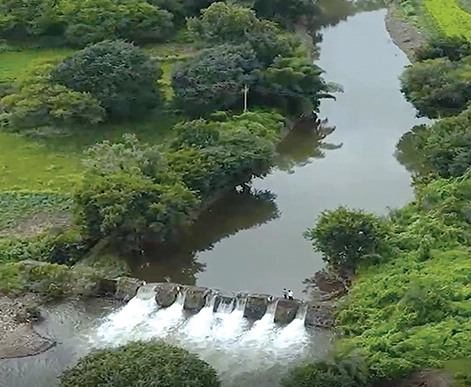
Advancing on our water management efforts, we carried out a Water Risk assessment across our operations. This has helped identify firm actions for achieving our target of becoming water positive by 2030.
Rethinking for Circular Economy
We are dedicated to sustainable and circular manufacturing practices, and employ reduce, recycle and reuse approach to our waste management. We have undertaken comprehensive efforts to reduce hazardous and non-hazardous wastes. We carefully map waste generation and disposal methods, helping us gain insights into our waste profile and take necessary actions.
In FY 2022-23, we reused 107,062.43 tons of metal waste which is ~99.8% of the total waste generated in the operations, in line with our focus on recycling and reusing the entire metal scrap generated. We also recycled waste oil via a change in disposal pathway to reduce hazardous waste and ETP sludge. This helped reduce disposal to landfills by ~40%. These initiatives propel us towards our target of Zero Waste to Landfill by 2030. Additionally, we use regenerative burners to recover ~30% of the waste heat.
In compliance with MPCB regulations, all hazardous wastes are sent to relevant authorized agencies for proper treatment. We have also deployed waste composters in our sites to process the food and garden waste, the bio-manure generated from which is used for gardening purpose.
Impact of our environmental programs
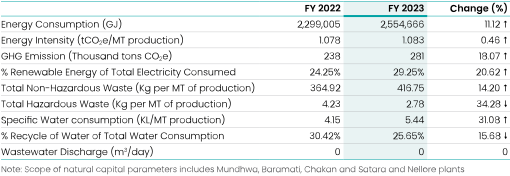


We understand that technology-based innovative solutions are the key sustainability enablers for our business. We now aspire to improve our sustainability performance. We aim to become carbon-neutral in operations by 2040 and become water positive in operations by 2030. Our goal is to achieve zero waste to landfill in all our sites by 2030 and increase our energy efficiency by 2% per annum y-o-y till 2030 to create a safer, smarter, and more sustainable future that delivers enduring value for all our stakeholders and our planet.